

TESTBERICHTEINSTITUT LLC · HOSPITAL BILLING EDUCATION
Hospital Cash Price Transparency: 7 Ultimate Facts
Hospital Cash Price Transparency can help you understand the public pricing information a hospital has posted and compare it with the information on your bill. Federal Hospital Price Transparency requirements under 45 CFR Part 180 require covered hospitals to make specified standard-charge information publicly available. In this guide, Hospital Cash Price Transparency refers to the discounted-cash-price component and related published pricing information within that broader federal framework.
That information can be useful when asking questions about how a hospital charge was calculated. But a lower published price does not automatically mean that your existing bill must be reduced to that amount.
By Testberichteinstitut LLC · Federal information reviewed:
U.S. educational information only · This guide explains federal Hospital Price Transparency concepts, with a focus on Hospital Cash Price Transparency. It does not determine the correct price or legal outcome for an individual medical bill.

1. Hospital Cash Price Transparency publishes several kinds of prices
Hospital Cash Price Transparency information can contain several different categories of standard charges. Those categories serve different purposes and should not automatically be treated as interchangeable. A careful Hospital Cash Price Transparency review starts by identifying which pricing category you are looking at.
One of the most important distinctions is between a hospital’s gross charge and its discounted cash price.
Gross Charge
The hospital’s established charge for an item or service before discounts. It should not automatically be interpreted as the amount every patient or payer ultimately pays.
Discounted Cash Price
The charge that applies when an individual pays cash or a cash equivalent for a hospital item or service, where such a price has been established.
Payer-Specific Charge
Hospitals also publish applicable negotiated charges established with third-party payers under the federal transparency framework.
Hospital transparency files also include other required pricing information, including de-identified minimum and maximum negotiated charge information where applicable.
Your actual financial responsibility may still depend on insurance coverage, contractual arrangements, deductibles, coinsurance, service setting, bundled services, financial-assistance eligibility and other circumstances.
2. Hospital Cash Price Transparency uses the federal public pricing framework
CMS explains that hospitals subject to the federal requirements generally must make their standard-charge information available online in two principal ways. These publication formats are central to a Hospital Cash Price Transparency review.
Machine-Readable File
A comprehensive digital file containing required standard charge information for hospital items and services.
- Gross charges
- Discounted cash prices
- Payer-specific negotiated charges
- Required de-identified negotiated-charge information
Consumer-Friendly Shoppable Services
Hospitals generally must make pricing information available for at least 300 shoppable services—or as many as the hospital provides if it provides fewer than 300.
A qualifying internet-based price estimator can satisfy the consumer-friendly display requirement when it meets the applicable federal requirements.
A shoppable service is generally one that a consumer can schedule in advance. Examples can include imaging, laboratory services and other planned hospital procedures.
A price estimator and a machine-readable file are different tools.
A consumer-facing estimator may provide an easier way to obtain an anticipated patient amount. A machine-readable file is designed to disclose standardized hospital pricing information in a format that can also be processed by software.
3. Hospital Cash Price Transparency: important 2026 updates
CMS finalized additional Hospital Price Transparency machine-readable-file requirements for 2026. The changes are intended to improve the accuracy, completeness and comparability of hospital pricing information. Consumers using Hospital Cash Price Transparency should therefore check current hospital files rather than rely on older screenshots.
Additional allowed-amount information
When certain payer-specific negotiated charges are based on percentages or algorithms, hospitals are now required to encode specified information relating to actual allowed amounts, including the median, 10th percentile and 90th percentile allowed amounts and the relevant count of allowed amounts.
- Hospital attestation: CMS finalized an attestation requirement concerning the completeness and accuracy of applicable machine-readable-file information.
- Organizational NPI: Hospitals must encode applicable organizational, or Type 2, National Provider Identifier information in the machine-readable file.
- Updated standardized file requirements: CMS continues to require use of its standardized machine-readable file layout, data specifications and data dictionary.
- Effective date: The revised requirements took effect January 1, 2026. CMS delayed enforcement of the newly revised §180.50 requirements until April 1, 2026.
Because Hospital Cash Price Transparency requirements can change with the broader federal Hospital Price Transparency framework, older articles, screenshots or downloaded files may not reflect the current federal format. Check the hospital’s current data and the latest CMS guidance.
4. How to compare your bill with Hospital Cash Price Transparency data
Comparing one number on a hospital bill with one number in a pricing file can be misleading if the underlying circumstances are different. A useful Hospital Cash Price Transparency comparison should match the hospital, service, setting, payer category and relevant date as closely as possible.
The safest approach is to compare like with like.
- Confirm the hospital location. Large hospital systems may operate multiple facilities. Make sure the pricing information applies to the location where the service was provided.
- Identify the item or service. Compare the service description and available billing code. Similar descriptions do not necessarily represent identical services.
- Check inpatient versus outpatient setting. The setting can affect both the service components and the applicable price.
- Compare the correct payment category. Determine whether you are looking at a gross charge, discounted cash price or a payer-specific negotiated charge.
- Check the relevant payer and plan. A negotiated rate for another insurer or another plan does not automatically apply to your coverage.
- Look for bundled or ancillary services. One published price may include related services while another amount may refer only to one component.
- Compare the date or file version. Pricing files and contractual arrangements change. Use the most relevant available information for the service date where possible.
Your statement says $9,000. The hospital publishes a $1,450 cash price.
Assume a hospital statement contains a $9,000 charge, while the hospital’s public pricing information lists a $1,450 discounted cash price for what appears to be a comparable service.
That difference can be a useful reason to ask which pricing category applies to the account and whether a self-pay price, insurance adjustment or other hospital policy may be relevant.
The comparison alone does not establish that you are legally entitled to pay $1,450. Service details, billing codes, location, payer status, dates and other circumstances still matter.
5. When Hospital Cash Price Transparency may be relevant to your bill
Hospital Cash Price Transparency can be particularly useful to understand when you are uninsured, self-paying or considering whether a hospital offers a self-pay option. The discounted cash price is one of the published price categories that may be relevant to that review.
But do not assume that a published cash price automatically replaces an insured price or applies retroactively to every existing account.
- What pricing category was used to calculate this account?
- Is a discounted cash or self-pay price available for this service?
- Does that price apply only before service or can it be considered after billing?
- Does the hospital offer financial assistance or another adjustment program?
- If insurance was used, which contracted amount and patient cost-sharing rules were applied?
Asking these questions is different from asserting that the lowest published price must apply. The hospital or health plan can explain which category was used and whether another available policy can be considered.
6. What Hospital Cash Price Transparency does not guarantee
- It does not automatically establish that the lowest published price applies to every patient.
- It does not automatically convert an insured or out-of-network account to a discounted cash price.
- A difference between a bill and a published price does not by itself establish fraud, improper coding or an unlawful overcharge.
- It does not automatically create a right to retroactive repricing.
- It does not automatically suspend payment deadlines, collection activity, interest, fees, credit reporting or litigation.
- It does not automatically extend an insurance appeal, legal deadline or contractual deadline.
- It does not guarantee a refund, reduction, settlement or financial-assistance award.
Hospital Cash Price Transparency is primarily an information and comparison framework. Other federal laws, state laws, health-plan rules, provider agreements or hospital policies may create separate rights or obligations. Hospital Cash Price Transparency should therefore be used as an information source, not as a stand-alone legal conclusion.
7. What to do when Hospital Cash Price Transparency information is unclear
Sometimes Hospital Cash Price Transparency information is difficult to interpret, a service cannot easily be matched, or the price shown does not appear to correspond with the bill you received.
- Save the relevant pricing information. Keep the webpage, file version, screenshot or data row you are comparing.
- Identify the specific billed charge. Do not send a general accusation. Identify the service, amount and date that needs clarification.
- Ask the hospital billing department in writing. Explain what published information you found and ask which pricing category applies to the account.
- Ask the insurer when insurance was involved. Compare the hospital bill with your Explanation of Benefits and ask how the patient responsibility was calculated.
- Keep copies of responses. Record dates, names, departments and important written statements.
- Check separate deadlines. A pricing question does not itself suspend payment, collection, appeal or court deadlines.
I am reviewing the charge for [service] dated [date]. Your published Hospital Cash Price Transparency information appears to list [price/category] for what may be a comparable service. Please explain which pricing category applies to my account, how my patient responsibility was calculated, and whether any different self-pay, insurance, financial-assistance or other applicable pricing policy should be considered.
This is an example of a request for clarification. It does not assert that a particular published price legally controls the account.
CMS monitors hospital compliance with the federal Hospital Price Transparency requirements and can take enforcement action for noncompliance. That regulatory enforcement process is different from obtaining an individual refund or bill adjustment.
Want a structured way to organize Hospital Cash Price Transparency questions?
The Medical Bill Review Toolkit provides editable letters, checklists and practical instructions for organizing your own hospital or physician billing correspondence, including questions raised by a Hospital Cash Price Transparency comparison.
You review and adapt the materials yourself. Testberichteinstitut LLC does not determine the correct hospital price, negotiate a bill or represent you.
Purchase is optional. No billing reduction, refund or other result is guaranteed.
Official Hospital Cash Price Transparency sources
Primary federal sources used for this Hospital Cash Price Transparency educational summary. These links do not imply government endorsement of Testberichteinstitut LLC.
Statutory Self-Advocacy & Defense Frameworks
Cross-reference our complete series of forensic medical billing guides or verify governing federal statutes directly through official government oversight portals.
Billing Dispute Hold
Freeze 30-day collection cycles immediately via written notice.
365-Day Credit Score Shield
Mandatory 1-year reporting safe harbor & $500 debt exclusion.
5-Digit CPT Code Itemization
Unbundling rights and auditing duplicate hospital markups.
FDCPA Debt Validation
Halt third-party collection agency phone calls and pressure.
240-Day Charity Care Hold
Mandatory relief protection during hardship review.
Cash Price Transparency
Benchmark gross chargemaster bills against published cash rates.
Federal No Surprises Act enforcement guidelines & Hospital Price Transparency mandates.
Consumer rights under federal debt collection statutes and FCRA medical credit reporting standards.
HIPAA 45 CFR § 164.524 statutory guidance regarding patient rights to designated billing records.
Full statutory text of 15 U.S. Code § 1692g regarding debt validation notices and consumer verification rights.
Start With the Package That Matches Your Situation
Both options include the Hospital Bill Review Toolkit, Doctor / Physician Bill Review Toolkit and U.S. Hospital List. Package 2 adds the separate Medical Debt Collection Toolkit.
Medical Bill Review Package
For hospital and doctor / physician billing.
Medical Bill Review + Collection Package
The complete package for provider billing and medical debt collection communication.
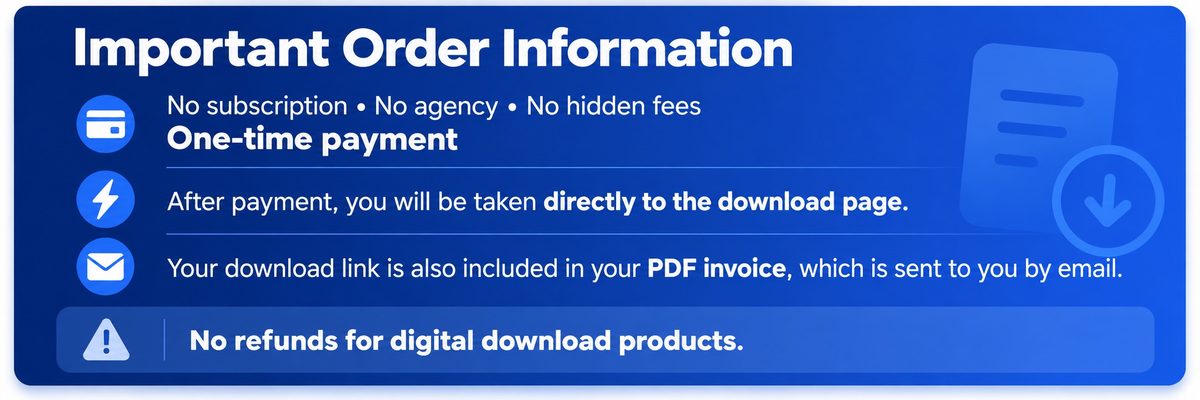
Your Files Are Available Immediately After Payment
Once your payment has been successfully completed, you will be automatically redirected to your package download page , where you can access your digital materials immediately.
Your purchased files can be accessed directly from the download page after successful payment.
Your PDF invoice is sent to you by email after purchase and also includes your package download link.