

TESTBERICHTEINSTITUT LLC · MEDICAL BILLING EDUCATION
HIPAA: 7 Essential Facts About CPT Codes and Billing Records
HIPAA can help you access existing medical and billing records. When a hospital or physician statement leaves questions unanswered, those records may provide information you can review alongside the bill.
The important distinction is access to information already maintained in qualifying records—not a universal right to a newly created, fully coded itemized bill before payment is due. [1]
By Testberichteinstitut LLC · Editorial review:
U.S. educational information · This guide concerns an individual requesting access to their own records. It does not assess a particular bill or replace legal advice.

1. A summary bill may not show every detail
Patient statements vary. A statement may group charges under broad descriptions, while other records contain more information about billing, payments or claims. A short statement is not, by itself, evidence that the bill is wrong.
Start by identifying the entry you do not understand. Ask the billing office what it represents and what more detailed records already exist. That keeps the conversation focused on a specific question rather than an unsupported accusation.
The statement
The document you received may summarize information recorded elsewhere.
The records
Qualifying billing, payment or claims records can fall within HIPAA access.
The question
Identify the information you need without assuming an error or a guaranteed remedy.
CPT® is a coding system maintained by the American Medical Association. In this guide, asking about CPT codes means asking about coding information already recorded for your services—not requesting the entire CPT code set. Other coding systems may also appear in billing records. [8]
A code alone does not tell you whether a charge is payable under your particular insurance coverage or whether the account contains an error. Compare the available documents and ask for clarification before drawing a conclusion.
2. What the HIPAA right of access covers
The HIPAA Privacy Rule applies to covered entities, including health plans, healthcare clearinghouses and healthcare providers that conduct specified electronic transactions. Not every business that holds health-related information is a covered entity. [9]
An individual generally may inspect or obtain a copy of protected health information about them maintained by or for a covered entity in a designated record set, subject to the rule’s exceptions. The right extends beyond the clinical chart. [2] [3]
Which existing records may be relevant?
- Provider records: medical and billing records about the individual.
- Health-plan records: qualifying enrollment, payment, claims and case-management records.
- Other qualifying records: information used to make decisions about individuals.
- Existing coding information: available CPT, HCPCS, revenue or diagnosis information within records covered by the access right.
HHS specifically explains that the HIPAA access right is not restricted to an electronic health record or a paper medical chart. Billing and payment records, insurance information and claims records can also be included. [10]
There are exclusions and limited grounds for denial. For example, separately maintained psychotherapy notes and certain information prepared for legal proceedings are treated differently. This is not a general exclusion of every mental-health record. [2]
3. HIPAA access does not require new analyses
HHS explains that a covered entity does not have to create new information, explanatory material or analyses that do not already exist in the designated record set just to answer an access request. [1]
That distinction matters when someone asks for a newly prepared coding report, a fresh audit or a specially organized statement containing every possible billing field. HIPAA does not universally require those new materials. It also does not guarantee that every service is recorded using CPT codes.
However, providing a copy is not the same as creating new substantive information. Existing information still has to be made accessible when the rule requires it. The HIPAA form-and-format requirements determine how that information should be supplied. [2]
A practical request therefore asks for existing billing and claims information, including available codes in qualifying records. It does not assert that the absence of a particular document makes a bill invalid. Separate laws or contractual requirements may create additional obligations; this guide does not determine those obligations for your case.
4. HIPAA response times, formats and copy fees
Generally 30 calendar days—not an automatic 60 days
A covered entity generally must act on a qualifying access request within 30 calendar days after receiving it. If it cannot do so, only one extension of up to another 30 days is allowed under this rule.
Before the initial period expires, the entity must provide a written explanation of the delay and the date by which it will complete the request. HHS describes these periods as outer limits, not reasons to delay a request that can be handled sooner. [4]
Ask for a usable copy
Request your preferred format. When the information is readily producible in that format, the access rule generally requires it. For information maintained electronically, an agreed readable electronic alternative applies if the requested electronic format is not readily producible.
A summary may replace access only with the individual’s advance agreement, including agreement to any charge for the summary. Do not assume that an ordinary patient statement answers a request for other existing records. [2]
HIPAA copy fees are limited
For an individual’s request for their own copy, a reasonable, cost-based fee may cover permitted copying labor, supplies, requested postage and an agreed summary or explanation. HHS excludes search and retrieval costs and general overhead from these permitted access-copy fees. [5]
Ask for the anticipated fee and format before copies are prepared. This discussion is about your own access request; fees and procedures for separate third-party requests can involve different rules.
5. An unpaid treatment bill does not remove HIPAA access
Unpaid healthcare charges are not, by themselves, a reason to deny access.
HHS states that a covered provider may not withhold a person’s qualifying health information merely because the person has not paid for the healthcare services. A permitted, reasonable copy fee is a separate issue. [6]
This protects access to information. It does not cancel the treatment bill, determine insurance coverage or create a universal right to withhold payment.
Keep the access question and the billing question distinct in your correspondence. Ask which existing records will be supplied, while separately tracking any payment, insurance or collection notice that needs attention.
6. How to prepare a HIPAA billing-records request
The following is a practical organization method, not a mandatory HIPAA form. Use the covered entity’s published access procedure where appropriate. HIPAA permits written-request requirements when the individual is informed of them, and reasonable identity verification may be necessary. [1] [2]
- Find the right recipient. Check the provider’s official website, portal or notice for its records department, privacy office or other designated contact.
- Identify the relevant account and period. Specify the provider and service dates. Supply only the identification reasonably needed through an appropriate channel.
- Describe existing information. Ask for the billing, payment or claims records you want, including available coding information where relevant.
- State your preferred format. Ask how the information can be delivered to you and whether a permitted copy fee is expected.
- Save proof of your HIPAA request. Keep a copy, the submission date, any acknowledgment and subsequent correspondence.
- Review the reply and track other deadlines. Compare the records with the statement and insurance information. List unanswered questions without assuming a billing error.
Please provide me with a copy of the existing billing, payment and claims information about me for [provider and service dates] that is maintained in records subject to my HIPAA right of access, including available coding information in those records. My preferred format is [format]. Please let me know about reasonable identity-verification requirements and any permitted copy fee. I am requesting existing information, not a new audit or analysis.
Replace the brackets, check the recipient’s instructions and use a suitable delivery method. This example does not start a separate insurance appeal, court response or debt-collector dispute procedure.
7. Following up on a HIPAA access request
First distinguish between records that exist but have not been supplied, information that the organization does not hold, and new analysis you asked it to create. Those situations need different follow-up questions.
If records appear to be missing, identify the specific category and ask whether it is maintained. Check whether you received a written extension or denial rather than assuming that silence cancels the bill.
HIPAA requires a timely written denial with its basis and complaint information. Some denial grounds also provide a right to review; not every denial is reviewable. When an entity does not hold the information but knows where it is held, it must tell the individual where to direct the request. [2]
For a possible violation, review the HHS Office for Civil Rights complaint process and its current submission requirements. A privacy complaint is different from resolving a charge, appealing insurance coverage or responding to a lawsuit; it does not automatically decide those matters. [7]
Need a starting point for your own correspondence?
The Medical Bill Review Toolkit provides editable letters, instructions and checklists for organizing your own questions and responses. Review the current package contents before purchasing. You adapt the materials and communicate yourself.
Purchase is optional. It does not expand your HIPAA rights or guarantee a result.
Official HIPAA and CPT information sources
These are background references, not endorsements of Testberichteinstitut LLC.
- HHS — Individual right of access and existing information
- 45 CFR § 164.524 — Access, formats, fees and denial procedures
- 45 CFR § 164.501 — Designated record set and other definitions
- HHS — Response periods for access requests
- HHS — Permitted fees for an individual’s copy
- HHS — Access despite an unpaid healthcare bill
- HHS — Filing a health information privacy complaint
- AMA — CPT information and licensing FAQs
- HHS — Summary of the Privacy Rule and covered entities
- HHS — Billing, payment and other records beyond the medical chart
Statutory Self-Advocacy & Defense Frameworks
Cross-reference our complete series of forensic medical billing guides or verify governing federal statutes directly through official government oversight portals.
Billing Dispute Hold
Freeze 30-day collection cycles immediately via written notice.
365-Day Credit Score Shield
Mandatory 1-year reporting safe harbor & $500 debt exclusion.
5-Digit CPT Code Itemization
Unbundling rights and auditing duplicate hospital markups.
FDCPA Debt Validation
Halt third-party collection agency phone calls and pressure.
240-Day Charity Care Hold
Mandatory relief protection during hardship review.
Cash Price Transparency
Benchmark gross chargemaster bills against published cash rates.
Federal No Surprises Act enforcement guidelines & Hospital Price Transparency mandates.
Consumer rights under federal debt collection statutes and FCRA medical credit reporting standards.
HIPAA 45 CFR § 164.524 statutory guidance regarding patient rights to designated billing records.
Full statutory text of 15 U.S. Code § 1692g regarding debt validation notices and consumer verification rights.
Start With the Package That Matches Your Situation
Both options include the Hospital Bill Review Toolkit, Doctor / Physician Bill Review Toolkit and U.S. Hospital List. Package 2 adds the separate Medical Debt Collection Toolkit.
Medical Bill Review Package
For hospital and doctor / physician billing.
Medical Bill Review + Collection Package
The complete package for provider billing and medical debt collection communication.
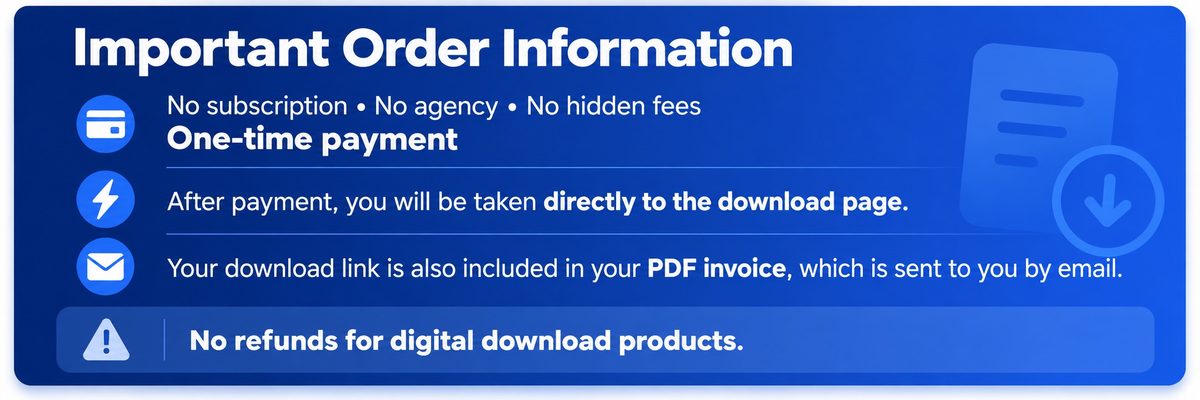
Your Files Are Available Immediately After Payment
Once your payment has been successfully completed, you will be automatically redirected to your package download page , where you can access your digital materials immediately.
Your purchased files can be accessed directly from the download page after successful payment.
Your PDF invoice is sent to you by email after purchase and also includes your package download link.