

Billing Transparency & Consumer Self-Help
TESTBERICHTEINSTITUT LLC · MEDICAL BILLING EDUCATION
CPT Codes: 5 Essential Steps to Review an Itemized Bill
CPT Codes can help identify procedures and professional services that appear in medical billing and claims records. If a hospital or physician bill contains CPT Codes you do not understand, the codes can provide a useful starting point for asking more precise billing questions.
Reviewing CPT Codes does not mean that every unfamiliar code is wrong. A billing code alone cannot establish fraud, improper coding, medical necessity or the amount a particular patient legally owes.
The safest approach is to compare available CPT Codes with the bill, Explanation of Benefits, existing medical and billing records, and information supplied by the provider or health plan.
By Testberichteinstitut LLC · Federal information reviewed:
U.S. educational information only · This guide does not provide professional medical-coding advice and does not determine whether a particular CPT Code or medical charge is correct.

1. Understand what CPT Codes can — and cannot — tell you
CPT Codes identify medical procedures and professional services within the CPT coding system. They are commonly used in healthcare billing, claims processing and reimbursement administration.
When CPT Codes appear on your records, they can help you identify which procedure or service category was submitted for billing.
However, reading CPT Codes does not by itself answer every question about a patient’s bill.
What was coded?
Available CPT Codes can help identify procedures or services represented in billing and claims information.
What was charged?
The charge associated with a CPT Code may depend on the provider, payer, setting, contract and other circumstances.
What does insurance allow?
A health plan’s allowed amount can differ from the provider’s original charge. The CPT Code alone does not determine patient responsibility.
An unfamiliar CPT Code is not proof that a provider made a coding error.
A repeated CPT Code is not automatically a duplicate charge. More than one service, unit, professional component, facility component or other billing circumstance may sometimes explain apparently similar entries.
CPT Codes do not include the price of the service
CPT Codes identify procedures and services, but the AMA does not establish the actual dollar amount a hospital, physician, insurer or patient must pay for a CPT-coded service.
Charges and reimbursement can depend on contracts, insurance benefits, geographic location, service setting, provider status and other factors.
2. CPT Codes may appear in existing HIPAA-accessible records
A short patient statement may not display every piece of billing information maintained elsewhere by a healthcare provider or health plan.
Under the HIPAA Privacy Rule, an individual generally has a right to access protected health information about themselves maintained in one or more designated record sets, subject to applicable exceptions.
Those designated record sets can include medical records, billing records, payment records, claims information and other qualifying records used to make decisions about the individual.
Existing billing information
Billing records may provide information beyond what appears on a simple patient statement.
Insurance claim information
Claims records can contain CPT Codes or other coding information submitted in connection with payment.
Existing clinical documentation
Relevant medical records can help provide context for services reflected in billing information.
HIPAA does not universally require creation of a new CPT Codes report.
The federal access right concerns qualifying information already maintained in a designated record set.
HHS explains that a covered entity generally is not required to create new information, explanatory materials or analyses that do not already exist in the designated record set.
Therefore, a consumer should not claim that HIPAA automatically requires every provider to generate a new custom itemized statement containing every CPT Code, quantity, modifier or other requested data element.
How long can a HIPAA access request take?
A covered entity generally must act on an individual’s qualifying HIPAA access request within 30 calendar days after receiving it.
If additional time is needed, the Privacy Rule allows only one extension of up to an additional 30 days, subject to the required written notice.
Can the provider charge for copies?
HIPAA permits a reasonable, cost-based fee for certain copies. Permitted costs can include specified copying labor, supplies and postage.
Search and retrieval costs are not included among the permitted HIPAA access-copy charges. Applicable details depend on the form of the records and the specific request.
Send a HIPAA records request to the healthcare organization that maintains the records.
Do not send complete medical records, Social Security numbers, insurance identifiers or sensitive account information to Testberichteinstitut LLC through ordinary email.
3. Review CPT Codes for questions — not automatic conclusions
A practical CPT Codes review looks for entries that deserve clarification. It does not label every unusual entry an error.
The following examples can justify a question to the provider or insurer.
Code you do not recognize
If a CPT Code appears unfamiliar, ask what service it represents and how it relates to the care received.
Apparently repeated entries
Similar CPT Codes or charges can be reviewed for possible duplication, while recognizing that some repeated services may be legitimate.
Unexpected service level
If a CPT Code seems inconsistent with what you remember, ask the provider or insurer to explain the coding and supporting documentation.
Separate related charges
Related services may sometimes appear under separate CPT Codes. Ask how the charges were structured instead of assuming improper unbundling.
Compare the bill with the care and records you actually received.
Check the provider, service dates, description of services, amounts and available billing codes.
If you do not understand a service or CPT Code, contact the provider or facility and ask for clarification.
Do not diagnose a coding error from a code alone
Determining whether CPT Codes were selected correctly can require review of clinical documentation, coding guidance, payer policies, modifiers, service setting and other facts.
Testberichteinstitut LLC does not perform professional coding audits and does not decide whether a particular CPT Code should have been used.
4. Compare CPT Codes with the bill, EOB and existing records
A CPT Codes review is more useful when several documents are compared together instead of looking at one billing line in isolation.
What is the provider charging?
Review service dates, descriptions, provider information, charges and CPT Codes where displayed.
What did the health plan process?
An Explanation of Benefits is not a bill. It can show submitted charges, allowed amounts, insurer payments and patient responsibility.
What documentation exists?
Existing medical, billing and claims records can provide context for the services and CPT Codes being reviewed.
One CPT Code appears twice
Assume two apparently similar entries appear on the same medical bill.
Do not immediately state: “This is duplicate billing.”
A safer question is:
I noticed two entries that appear similar on my billing records. Please explain whether they represent separate services, units, providers or other billing components, and please review the account if one of the entries was included in error.
This wording asks for review without claiming that a billing violation has already been established.
5. Ask for clarification when CPT Codes or charges remain unclear
After reviewing available CPT Codes, identify the exact issue you want the provider or insurer to address.
A focused written question is usually more useful than a broad statement that the entire bill is wrong.
- Identify the provider and service date. Make sure the question concerns the correct hospital, physician and date of service.
- Identify the CPT Code or charge in question. Refer to the code or billing entry exactly as it appears in the records available to you.
- Explain what is unclear. State whether the concern involves an unfamiliar service, apparently repeated charge, amount, date or other discrepancy.
- Ask for explanation or review. Request clarification and ask for correction if the provider confirms an error.
- Keep the response. Save revised statements, explanations, portal messages, letters and call notes.
- Track unrelated deadlines. Do not assume that reviewing CPT Codes, requesting records or asking for a correction automatically postpones a payment, insurance, collection or court deadline.
I am reviewing the billing information for services dated [date]. The CPT Code / billing entry identified as [entry] is unclear to me. Please explain what service this entry represents and how it relates to the services provided. If the billing office determines that the entry is inaccurate or duplicated, please correct the account and send me an updated statement.
Adapt the wording to the actual facts. Do not state that a CPT Code is incorrect unless you have a reliable basis for that conclusion.
Separate an access request from a request to create a new document.
If you requested an existing billing or medical record under HIPAA, ask whether the requested information is maintained in a designated record set.
If the organization says the requested custom document does not exist, that is different from denying access to qualifying existing PHI.
HIPAA contains procedures for access denials, including written notice requirements and review rights in certain circumstances.
Need a structured way to organize CPT Codes and billing questions?
The Medical Bill Review Toolkit includes editable letters, instructions and checklists for organizing your own hospital and physician billing correspondence.
You can use the materials to organize questions about CPT Codes, billing records, statements and provider responses.
Testberichteinstitut LLC does not perform professional CPT coding, coding audits or individualized legal analysis.
Purchase is optional. No billing correction, reduction, refund or other outcome is guaranteed.
Official CPT Codes and HIPAA reference sources
Primary regulatory sources are provided for independent review. These references do not imply government or professional endorsement of Testberichteinstitut LLC.
- 45 CFR § 164.524 — HIPAA Right of Access
- HHS — Individual Right of Access Guidance
- HHS — Your Medical Records
CPT® is a registered trademark of the American Medical Association. The AMA owns copyright in the CPT code set and related CPT content.
Testberichteinstitut LLC is not affiliated with or endorsed by the AMA. This page discusses CPT Codes only at a general educational level and does not reproduce or distribute the CPT code set or CPT descriptors.
Statutory Self-Advocacy & Defense Frameworks
Cross-reference our complete series of forensic medical billing guides or verify governing federal statutes directly through official government oversight portals.
Billing Dispute Hold
Freeze 30-day collection cycles immediately via written notice.
365-Day Credit Score Shield
Mandatory 1-year reporting safe harbor & $500 debt exclusion.
5-Digit CPT Code Itemization
Unbundling rights and auditing duplicate hospital markups.
FDCPA Debt Validation
Halt third-party collection agency phone calls and pressure.
240-Day Charity Care Hold
Mandatory relief protection during hardship review.
Cash Price Transparency
Benchmark gross chargemaster bills against published cash rates.
Federal No Surprises Act enforcement guidelines & Hospital Price Transparency mandates.
Consumer rights under federal debt collection statutes and FCRA medical credit reporting standards.
HIPAA 45 CFR § 164.524 statutory guidance regarding patient rights to designated billing records.
Full statutory text of 15 U.S. Code § 1692g regarding debt validation notices and consumer verification rights.
Start With the Package That Matches Your Situation
Both options include the Hospital Bill Review Toolkit, Doctor / Physician Bill Review Toolkit and U.S. Hospital List. Package 2 adds the separate Medical Debt Collection Toolkit.
Medical Bill Review Package
For hospital and doctor / physician billing.
Medical Bill Review + Collection Package
The complete package for provider billing and medical debt collection communication.
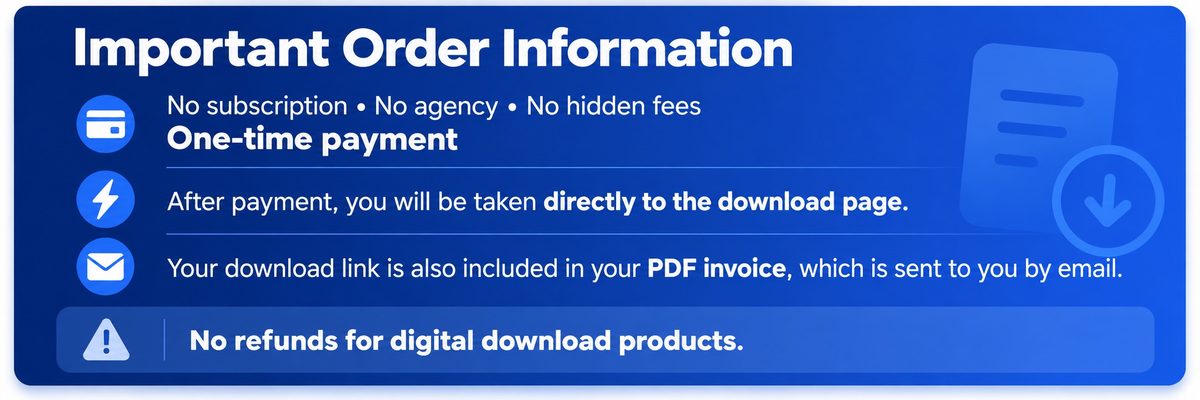
Your Files Are Available Immediately After Payment
Once your payment has been successfully completed, you will be automatically redirected to your package download page , where you can access your digital materials immediately.
Your purchased files can be accessed directly from the download page after successful payment.
Your PDF invoice is sent to you by email after purchase and also includes your package download link.