

The No Surprises Act: When Federal Law Protects Patients From Unexpected Out-of-Network Bills
Receiving an unexpected out-of-network medical bill can be stressful. Federal protections under the No Surprises Act limit balance billing and out-of-network cost-sharing in important situations, including most covered emergency services, certain non-emergency services associated with visits to in-network facilities, and covered air ambulance services.
These protections are significant, but they do not apply to every medical bill, every health plan, every healthcare setting, or every out-of-network service. Coverage, service type, facility status, valid notice-and-consent procedures, state law, and other circumstances can affect which protections apply.
 The No Surprises Act limits certain unexpected out-of-network charges
and generally keeps patients out of eligible payment disputes between
health plans and providers.
The No Surprises Act limits certain unexpected out-of-network charges
and generally keeps patients out of eligible payment disputes between
health plans and providers. First Determine Whether the Federal Protections Apply
The federal balance-billing protections discussed on this page generally apply to consumers enrolled in most employer-sponsored group health plans, individual health insurance coverage, Marketplace coverage, and applicable Federal Employees Health Benefits coverage.
Medicare, Medicaid, Indian Health Service, Veterans Affairs healthcare, and TRICARE operate under separate protections and should not be analyzed as though the No Surprises Act private-insurance rules apply to them in exactly the same manner.
1. What Is Surprise or Balance Billing?
Surprise billing can occur when a consumer receives care involving an out-of-network provider or facility under circumstances in which the consumer did not reasonably expect to receive out-of-network services.
Balance billing generally refers to an out-of-network provider or facility billing a consumer for an amount beyond applicable patient cost-sharing after the health plan has paid or determined its payment.
The No Surprises Act prohibits this type of balance billing in specified circumstances. It does not, however, make every out-of-network medical bill unlawful.
A Better First Step Than Paying or Ignoring the Bill
If a bill appears inconsistent with your Explanation of Benefits or you believe federal surprise-billing protections may apply, review the bill, your health-plan information, and the circumstances of the care before deciding how to respond.
A billing question or dispute does not automatically postpone payment, insurance, collection, appeal, litigation, or other applicable deadlines.
2. Three Major Areas of Federal Protection
Most Covered Emergency Services
When applicable health coverage includes emergency services, federal rules generally require covered emergency services to be treated without prior authorization and without imposing out-of-network cost-sharing greater than applicable in-network cost-sharing merely because the provider or emergency facility is out-of-network.
Certain Services at In-Network Facilities
Federal protections generally apply to specified out-of-network non-emergency services provided in connection with a visit to an in-network hospital, hospital outpatient department, or ambulatory surgical center, subject to applicable federal exceptions.
Covered Air Ambulance Services
The No Surprises Act provides federal protections against certain out-of-network balance bills involving covered air ambulance services and generally limits applicable patient cost-sharing to the in-network level.
3. Notice & Consent: When Some Protections Can Be Waived
In certain non-emergency and post-stabilization circumstances, an out-of-network provider or facility may ask a consumer to sign a federal notice-and-consent form agreeing to receive out-of-network care and give up specified balance-billing protections.
A valid notice-and-consent process is subject to federal requirements, including requirements concerning timing, content, presentation, and the consumer’s ability to provide informed consent.
Some Services May Permit Notice & Consent
Certain scheduled out-of-network services at an in-network facility and certain qualifying post-stabilization services may permit a valid notice-and-consent process.
Important Federal Limitations
Federal rules do not permit notice and consent to waive protections for certain services, including specified ancillary services and other services identified by federal law.
A general hospital admission form or ordinary medical consent form is not necessarily the federal Notice and Consent form used to waive specified No Surprises Act protections.
Whether a waiver is valid depends on compliance with the applicable federal requirements and the circumstances of the services.
4. Important Exception: Ground Ambulance Services
Federal No Surprises Act Balance-Billing Protections Generally Do Not Cover Ground Ambulances
The federal surprise-billing protections discussed on this page generally do not apply to ground ambulance services.
State or local law may provide separate protections, so consumers who receive an unexpected ground ambulance bill should review the rules applicable where the service occurred.
5. What “In-Network Cost-Sharing” Protection Means
When an item or service is protected by the federal balance-billing rules, applicable patient cost-sharing generally cannot exceed the amount required under the federal rules as in-network cost-sharing for that protected item or service.
This does not necessarily mean that the consumer owes nothing. Applicable deductibles, copayments, or coinsurance may still be owed.
Federal surprise-billing protections generally limit specified out-of-network charges. They do not automatically eliminate legitimate in-network cost-sharing or other amounts properly owed under the consumer’s health coverage.
6. What Happens When the Provider and Health Plan Disagree About Payment?
The No Surprises Act established a federal Independent Dispute Resolution (IDR) process for certain eligible payment disputes between out-of-network providers, facilities, air ambulance providers, and health plans or issuers.
The consumer is generally not the party whose payment offer is decided in this provider-plan Federal IDR process.
The health plan makes an initial payment or provides a notice of denial concerning an eligible out-of-network claim.
For eligible disputes, the disputing parties have a 30-business-day open-negotiation period to attempt to agree on an appropriate payment amount.
If an eligible dispute remains unresolved after open negotiation, either party may initiate the Federal IDR process within the applicable federal time period.
Federal IDR Does Not Apply to Every Payment Dispute
Whether the Federal IDR process applies can depend on the health plan, provider, service, state law, and whether an applicable state process or All-Payer Model Agreement governs the out-of-network rate.
7. A Careful Process if You Receive a Questionable Out-of-Network Bill
- Review the Bill and Explanation of Benefits: Compare the provider bill with your insurer’s EOB and identify the provider, facility, service date, network status, and patient responsibility shown on each document.
- Identify the Type of Service: Determine whether the bill concerns emergency services, post-stabilization care, non-emergency care related to a visit to an in-network facility, air ambulance services, ground ambulance services, or another type of care.
- Check Your Coverage: Confirm what health plan or insurance coverage was in effect for the date of service and whether the plan is subject to the federal protections discussed here.
- Review Any Notice & Consent Documents: If a provider claims that you waived federal protections, obtain and review any Notice and Consent form that was provided and determine whether the applicable requirements appear to have been satisfied.
- Contact the Provider and Health Plan: If the charge appears inconsistent with applicable protections, ask both the provider and insurer to review the account and explain the patient-responsibility calculation.
- Keep Written Documentation: Retain bills, EOBs, notices, consent forms, communications, responses, delivery records, dates, and representative names.
- Do Not Ignore Important Deadlines: A billing inquiry or No Surprises Act complaint does not automatically suspend every payment, insurance, collection, court, or other legal deadline.
Consumers Can Report Suspected No Surprises Act Violations
CMS provides federal resources for consumers who believe a provider, facility, health plan, or other covered entity may not be following applicable No Surprises Act requirements.
Supporting documentation such as bills, Explanation of Benefits documents, notices, and correspondence may be useful when seeking assistance or submitting a complaint.
8. Different Protections Apply if You Do Not Have or Do Not Use Insurance
The No Surprises Act also contains separate protections for certain uninsured and self-pay consumers.
In many circumstances, providers must provide a Good Faith Estimate when qualifying care is scheduled in advance or when an eligible consumer requests one.
An uninsured or self-pay consumer may be eligible for the federal patient-provider dispute-resolution process if the final bill from a provider is at least $400 higher than the applicable Good Faith Estimate, subject to the federal requirements and deadlines.
Important Consumer, Legal & No Surprises Act Regulatory Disclosure
Private independent organization. Testberichteinstitut Wyoming is a private, independent consumer research and educational organization. It is not a federal, state, or local government agency, court, law firm, healthcare provider, hospital, ambulatory surgical center, insurer, health plan, debt collector, consumer reporting agency, medical-coding organization, or professional insurance adviser.
No government, insurer, or professional endorsement. Testberichteinstitut Wyoming is not affiliated with, sponsored by, approved by, or endorsed by the U.S. Department of Health and Human Services (HHS), Centers for Medicare & Medicaid Services (CMS), U.S. Department of Labor, U.S. Department of the Treasury, Office of Personnel Management, any health insurer, or any other governmental, regulatory, healthcare, insurance, or professional organization unless an affiliation is expressly stated in writing.
General educational self-help information only. This website and its guides, templates, checklists, regulatory summaries, correspondence examples, and other materials are provided solely for general informational, educational, organizational, and personal self-advocacy purposes. They do not constitute individualized legal, medical, financial, insurance, tax, accounting, debt-management, or other professional advice.
No professional relationship. Visiting this website, purchasing or downloading a toolkit, using a template, or communicating with Testberichteinstitut Wyoming does not create an attorney-client, physician-patient, insurance-adviser, fiduciary, accountant-client, or other professional relationship.
Standardized materials only. Testberichteinstitut Wyoming does not investigate an individual purchaser’s insurance coverage, network status, medical services, Notice and Consent documents, state law, or other facts and does not determine whether the No Surprises Act applies to a particular bill. The toolkit does not constitute individualized legal document preparation or representation.
No Surprises Act scope varies. Federal protections depend on factors including the type of health coverage, service, provider, facility, network status, location, Notice and Consent requirements, and other applicable facts. Not every medical bill or out-of-network charge falls within federal balance-billing protections.
Emergency-service protection is not unlimited. Federal law provides important protections for most covered emergency services, but applicability depends on the health plan, service, facility, post-stabilization status, and other regulatory requirements.
Notice and Consent limitation. Federal rules permit waiver of specified protections in certain circumstances only when applicable requirements are satisfied. Certain services cannot use the Notice and Consent exception. The legal effect of a particular document depends on its contents, timing, circumstances, and compliance with applicable law.
Ground ambulance limitation. Federal No Surprises Act balance-billing protections generally do not apply to ground ambulance services. State or local law may provide separate protections.
No guarantee of zero patient responsibility. A protected service can still result in legitimate in-network deductibles, copayments, coinsurance, or other permissible patient cost-sharing. No Surprises Act protection does not mean that all covered care must be free.
Federal IDR limitation. Federal Independent Dispute Resolution is primarily a payment-resolution mechanism for qualifying disputes between providers, facilities, air ambulance providers, plans, issuers, and other eligible parties. It does not apply to every billing disagreement. State law or another applicable payment-resolution mechanism may govern some disputes.
No mandatory provider-plan IDR outcome from a consumer letter. Sending a consumer billing dispute or toolkit letter does not itself compel a provider or health plan to enter Federal IDR and does not determine whether the claim is IDR-eligible.
No automatic administrative or collection hold. A No Surprises Act inquiry, billing dispute, records request, complaint, or toolkit letter does not by itself automatically suspend payment obligations, collection activity, interest, fees, litigation, credit reporting, insurance deadlines, statutes of limitation, or other contractual or legal obligations.
No mandatory CPT® itemization representation. Testberichteinstitut Wyoming does not represent that the No Surprises Act or HIPAA universally requires every provider to create a newly generated bill containing every CPT®, Revenue, or other billing code before payment can be requested.
No outcome guarantee. Testberichteinstitut Wyoming does not promise or guarantee that use of any website information, toolkit, letter, billing inquiry, complaint, records request, or other material will result in application of the No Surprises Act, a billing correction, charge reduction, refund, collection suspension, insurance payment, successful appeal, settlement, or any other particular result.
No instruction to ignore obligations or legal documents. Nothing on this website should be interpreted as advising a consumer to ignore a medical bill, insurer communication, collection notice, payment deadline, appeal deadline, summons, lawsuit, judgment, garnishment document, statute of limitation, or other legally significant document.
State law may provide additional protections. State surprise-billing laws, insurance regulations, All-Payer Model Agreements, provider requirements, and other state or local rules may provide broader or different protections. In some situations, state law may determine aspects of patient cost-sharing or the out-of-network payment methodology.
Rules and guidance can change. Federal and state laws, regulations, agency guidance, court decisions, insurance requirements, provider policies, and Federal IDR procedures may change. Users should verify current official requirements before relying on general regulatory information for an individual matter.
Federal No Surprises Act references reviewed: August 18, 2026.
Statutory Self-Advocacy & Defense Frameworks
Cross-reference our complete series of forensic medical billing guides or verify governing federal statutes directly through official government oversight portals.
Billing Dispute Hold
Freeze 30-day collection cycles immediately via written notice.
365-Day Credit Score Shield
Mandatory 1-year reporting safe harbor & $500 debt exclusion.
5-Digit CPT Code Itemization
Unbundling rights and auditing duplicate hospital markups.
FDCPA Debt Validation
Halt third-party collection agency phone calls and pressure.
240-Day Charity Care Hold
Mandatory relief protection during hardship review.
Cash Price Transparency
Benchmark gross chargemaster bills against published cash rates.
Federal No Surprises Act enforcement guidelines & Hospital Price Transparency mandates.
Consumer rights under federal debt collection statutes and FCRA medical credit reporting standards.
HIPAA 45 CFR § 164.524 statutory guidance regarding patient rights to designated billing records.
Full statutory text of 15 U.S. Code § 1692g regarding debt validation notices and consumer verification rights.
Start With the Package That Matches Your Situation
Both options include the Hospital Bill Review Toolkit, Doctor / Physician Bill Review Toolkit and U.S. Hospital List. Package 2 adds the separate Medical Debt Collection Toolkit.
Medical Bill Review Package
For hospital and doctor / physician billing.
Medical Bill Review + Collection Package
The complete package for provider billing and medical debt collection communication.
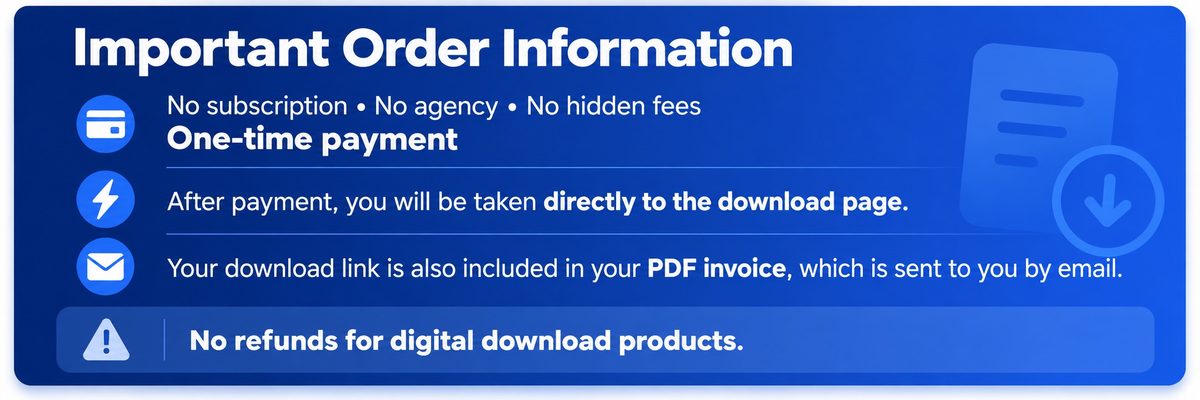
Your Files Are Available Immediately After Payment
Once your payment has been successfully completed, you will be automatically redirected to your package download page , where you can access your digital materials immediately.
Your purchased files can be accessed directly from the download page after successful payment.
Your PDF invoice is sent to you by email after purchase and also includes your package download link.